First Global Prevalence Study into Hidradenitis Suppurativa reveals need for urgent action from policy makers GHiSA study confirms prevalence higher than previously thought
3 Dec 2025
A landmark global study has revealed that hidradenitis suppurativa (HS), a painful, scarring inflammatory skin disease that affects around 1% of the world’s population, or roughly one in every 100 people. This places HS among the more common chronic inflammatory conditions worldwide, occurring as frequently as rheumatoid arthritis (RA), which has an estimated prevalence of 0.5–1.0%.
Yet despite causing severe pain and long-term tissue damage, HS remains far less recognised than RA.
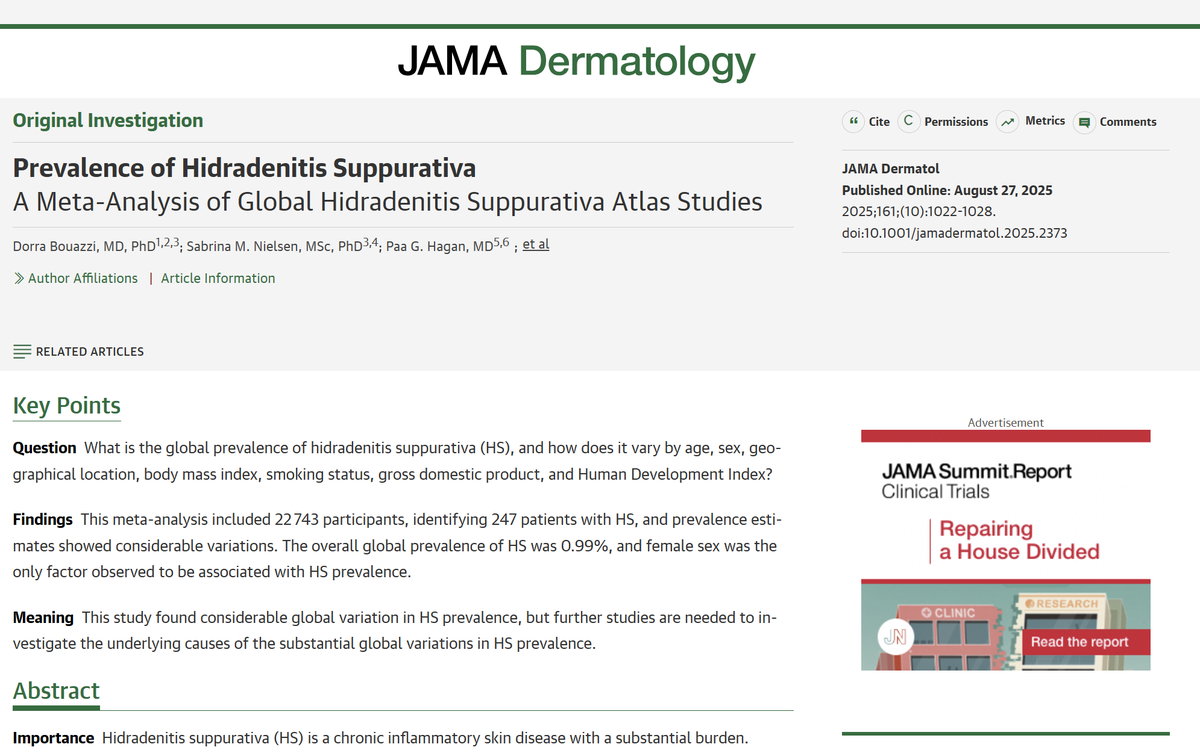
In highlighting HS as a significant but under-acknowledged global public health challenge, the study also suggests wide variations in prevalence between regions, pointing to potential genetic, environmental or healthcare-related influences. Strikingly, women were found to be disproportionately affected, with female sex emerging as the only consistent demographic risk factor. No clear associations were seen with BMI, smoking status, GDP or the Human Development Index, underscoring the need for deeper research into the drivers of this debilitating disease.
First global prevalence study to use a fully standardised methodology
Conducted by the Global Hidradentitis Suppurativa Atlas (GHiSA), this is the first global prevalence study to use a fully standardised methodology. It examined 22,743 participants across 23 countries and six continents to determine how many people had HS at a given point in time – with every case confirmed through clinical examination. GHiSA aims to address major knowledge gaps and improve global awareness, research and management of HS through worldwide collaboration. It forms part of the International League of Dermatological Societies’ Grand Challenges in Global Skin Health initiative.
About Hidradenitis Suppurativa
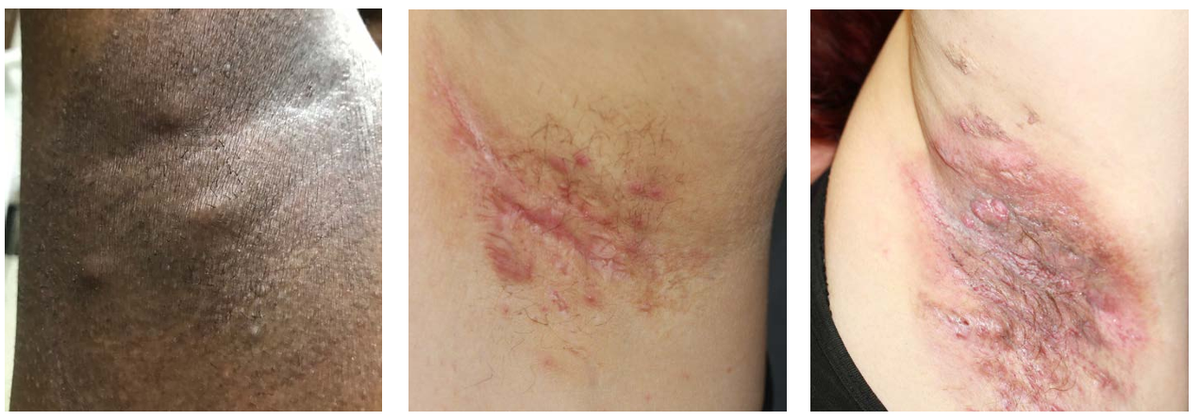
HS is a non-communicable, chronic skin disease characterised by painful nodules and abscesses in skin folds. These can leak foul-smelling fluid, cause scarring and lead to severe physical, social and psychological distress. Stigma and social isolation are frequently reported and are believed to contribute to the markedly increased suicide mortality observed in this population, estimated at 2.4 times that of the general population.
Call for urgent policy attention and investment
The GHiSA team is now calling for urgent policy attention and investment, warning that outdated assumptions about HS being rare are hindering diagnosis, care and resource allocation.
The study is the first phase of GHiSA’s multi-year research programme. Phase Two will use the findings to establish globally agreed diagnostic and reporting criteria for future studies. Phase Three will investigate phenotype, genotype, environmental and lifestyle factors and comorbidities to better understand HS and inform solutions.
“As it pools evidence across continents, this study sends a clear signal to policymakers and health systems that HS is not rare – and deserves far more attention”
GHiSA General Secretary Dorra Bouazzi MD, PhD.

Professor Gregor Jemec, Professor of Dermatology at the University of Copenhagen and Chair of GHiSA, added:
“This is a unique collaboration that allows direct pooling of standardised data actively collected in an identical manner.
The GHiSA studies are a powerful example of a mutually committed global academic collaboration and should form the foundation of meaningful change in how HS is recognised and ultimately managed worldwide.”
Professor Gregor Jemec, Professor of Dermatology at the University of Copenhagen and Chair of GHiSA

GHiSA works in collaboration with patient organisations including GlobalSkin, the International Alliance of Dermatology Patient Organizations, Patientforeningen HS, EHSF and research partners C3/Historic and HS Progress. The project is funded by a grant from ILDS with support from UCB.
ILDS President, Prof Henry W. Lim said:
“Skin disease places a major burden on populations around the world, which is why our Grand Challenges in Global Skin Health initiative, which includes GHiSA, is so vital. We’re delighted to collaborate with the GHiSA team and congratulate them on the publication of this important study. We hope it proves a turning point in treatment for this distressing disease.”
ILDS President Prof Henry W. Lim
About the Global Hidradentitis Suppurativa Atlas (GHiSA)
The Global Hidradenitis Suppurativa Atlas (GHiSA) aims to address major knowledge gaps and improve global awareness, research and management of HS through worldwide collaboration. It forms part of the ILDS’ Grand Challenges in Global Skin Health initiative which also supports the development of Atlases for Psoriasis, Atopic Dermatitis and Vitiligo.
The GHiSA Global Prevalence study can be viewed here.