From rash to diagnosis: first insights on the impact of formal and informal learning on competency strengthening in primary health workers in Tanzanian skin camps
8 Dec 2025
From rash to diagnosis: first insights on the impact of formal and informal learning on competency strengthening in primary health workers in Tanzanian skin camps
Authors:
Nelly Mwageni [1], Anne Schoenmakers [2] [3], Peter Nugus4, Robin van Wijk [2] [3], Deusdedit Kamara [5], Riziki Kisonga [5], Blasdus Njako [6], Phellister Nyakato [6], Beatrice Mutayoba [5], Shigela Marco [5], Iddi Kassim Njarita [5], John E. Masenga [7], Liesbeth Mieras [2], Christa Kasang [8], Carolin Gunesch [8], Kidist Bobosha [9], Stephen E. Mshana1 [1]
- Catholic University of Health and Allied Sciences, Mwanza, Tanzania.
- NLR – until No Leprosy Remains, Amsterdam, NL.
- Erasmus MC, University Medical Center Rotterdam, Rotterdam, NL.
- McGill University, Montreal, Quebec, Canada.
- National Tuberculosis & Leprosy Programme (NTLP), Dodoma, Tanzania.
- DAHW Deutsche Lepra- und Tuberkulosehilfe e.V. (DAHW), Tanzania.
- Regional Dermatology Training Centre (RDTC) Kilimanjaro, Moshi, Tanzania.
- DAHW Deutsche Lepra- und Tuberkulosehilfe e.V. (DAHW), Würzburg, Germany.
- Armauer Hansen Research Institute (AHRI), Addis Ababa, Ethiopia.
Abstract
This qualitative study presents preliminary findings from the Post-Exposure Prophylaxis for Leprosy (PEP4LEP) 2.0 studies in Tanzania, exploring how health workers learn to diagnose and manage skin diseases, including neglected tropical diseases such as leprosy. Interviews with ten primary health workers revealed that hands-on experience, mentoring, and use of the
Netherlands Leprosy Relief (NLR) SkinApp enhanced both formal and informal learning. The results of the study underscore the value of integrating structured training with real-world clinical practice and opportunities for continuing professional development.
Conflict of interest: None
Key words: competency strengthening; dermatology training; primary health workers; skin NTDs; leprosy; Tanzania; tele-dermatology.
Funding: PEP4LEP is part of the EDCTP2 programme supported by the European Union; the project also received funding from the Leprosy Research Initiative (Amsterdam). PEP4LEP 2.0 is supported by the Global Health EDCTP3 Joint Undertaking and its members. The funders had no role in study design, data collection/analysis or publication.
Key Learning Points
- Given the shortage of dermatologists in many African countries, primary health workers – many of whom have limited dermatological expertise – are often the main point of contact for patients with common skin diseases, as well as skin NTDs.
- Preliminary findings from the PEP4LEP 2.0 studies demonstrate the importance of integrating formal education in dermatology for primary health workers with ongoing, informal, context-based learning opportunities.
- A hybrid approach to competency building – combining classroom teaching, on-the-job learning, peer- and digital support – can sustainably improve skin healthcare in rural areas with limited access to dermatological services.
Introduction
Skin conditions are highly prevalent in resource-poor countries, with rates exceeding 50% in rural areas and reaching up to 80% in some regions.1 While often not life-threatening, skin diseases such as leprosy cause stigma and disability, which can lead to a reduced quality of life.2,3 In such circumstances, diagnosis is usually clinical, which depends on well-trained healthcare staff. Yet, most African countries have fewer than one dermatologist per million people, creating a significant gap in service provision.4
In rural areas, primary health workers, who often lack dermatological and leprosy training, commonly label various dermatoses as ‘rash’ and manage them empirically using combinations of topical antibacterial, antimycotic, and corticosteroid agents.5 Besides specialist shortages, referral is frequently impractical due to geographical and financial barriers. Against these difficulties, evidence suggests that short formal dermatological training can significantly improve health workers’ ability to identify and manage skin diseases.2
Beyond formal training, informal and incidental learning through real-world experience, peer interaction, and mentoring play a key role in adult learning.6 Such opportunities, which are increasingly enhanced by technology, support practical, learner-centred development – especially when formal education is limited.
The recently adopted World Health Assembly (WHA) resolution Skin Diseases as a Global Public Health Priority (May 2025) emphasizes that with appropriate training, essential medicines, and support, local health teams can effectively manage common skin conditions, thereby contributing to stronger primary care service provision and progress toward universal health coverage.2 The resolution also highlights the importance of addressing skin-related neglected tropical diseases (NTDs), such as leprosy, as part of integrated service delivery. To support these goals, the World Health Organization (WHO) promotes an integrated approach to expanding access to quality dermatological care.
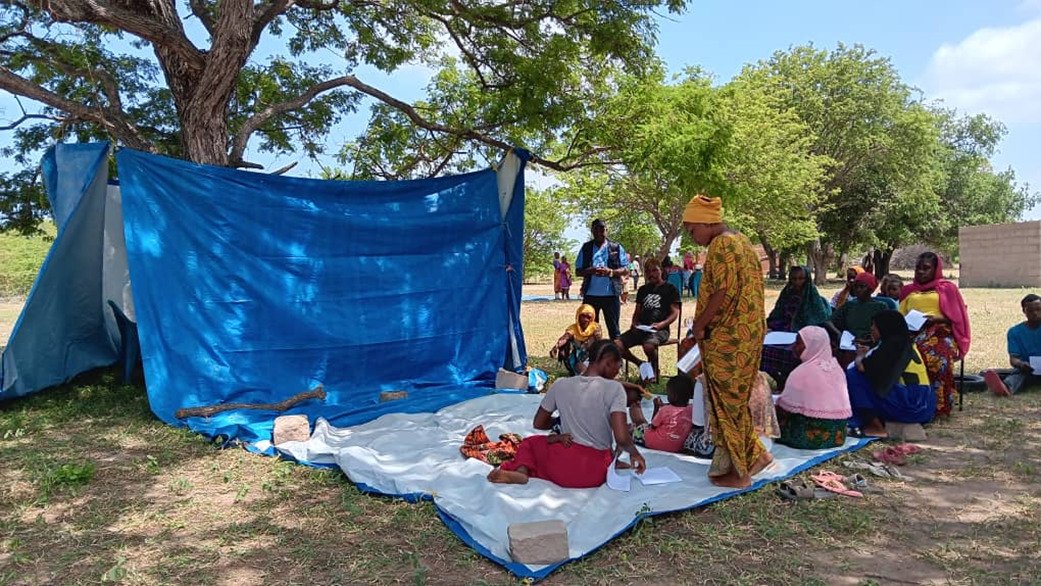
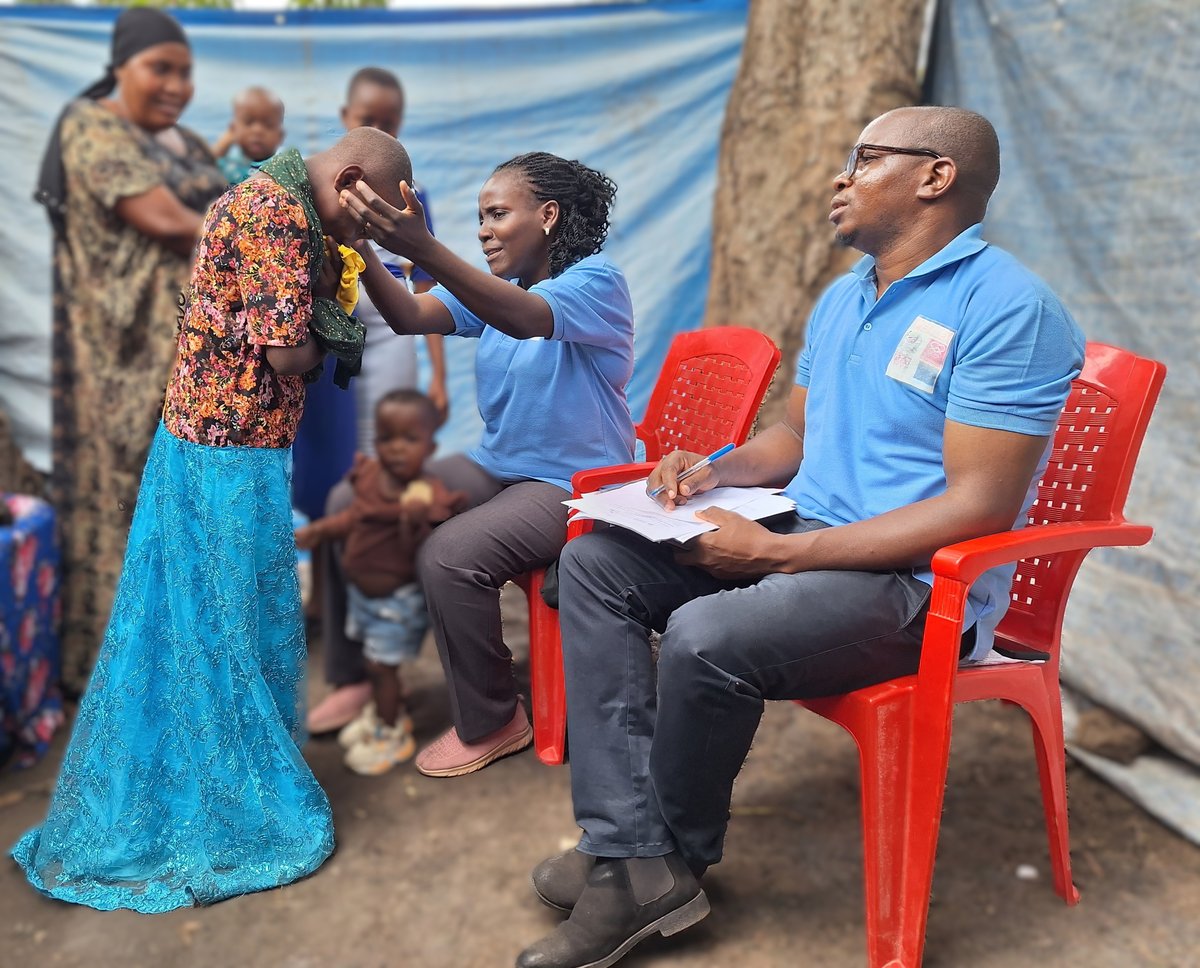
The Post-Exposure Prophylaxis for Leprosy (PEP4LEP) and PEP4LEP 2.0 studies in Ethiopia, Mozambique, and Tanzania screen for both skin-NTDs and common dermatoses.7 In community screening events (‘skin camps’), approximately 100 community contacts of leprosy index cases (i.e., the 20 closest households) are invited for skin screening and chemoprophylaxis (Figures 1 and 2). Participating health workers receive a three-day training workshop with occasional refresher sessions, mentorship and on-the-job training from a dermatologist or senior clinician, and practical support via the Netherlands Leprosy Relief (NLR) SkinApp (now also integrated in the WHO Skin NTDs App).8
During the skin camps, we identified the relevant experiences and perceptions of learning by participating health workers. This article presents our preliminary findings.
Methods
A qualitative study was conducted in Lindi Rural, Mvomero District, and Morogoro Rural District, three Tanzanian districts involved in the PEP4LEP and PEP4LEP 2.0 projects, to explore primary health workers’ learning experiences, training needs, and use of the NLR SkinApp. Ten participants were purposively sampled to ensure diversity in district, sex, and professional role. Eligible consenting participants resided in the project areas, had attended at least one formal training session, and participated in a skin camp.
Key informant interviews (lasting approximately 30 minutes) were conducted by phone using a semi-structured guide translated into Swahili. Interviews were audio-recorded, supported by notes, transcribed verbatim and, if in Swahili, translated to English. Data were analysed thematically using Braun and Clarke’s Six-Phase Framework.9
Ethical approval was granted by the CUHAS/BMC Research and Ethics Committee (CREC/364/2019) and NIMR (NIMR/HQ/R.8c/Vol.1/1530). Participation was voluntary, with written informed consent. All data were anonymised for analysis.
Results
The study participants comprised ten healthcare professionals, evenly divided by gender (five men and five women), with ages ranging from 31 to 60 years. Participants were evenly distributed across the three districts; roles included three medical officers, two nurses, and five clinical officers. Participants had undergone professional training spanning 1 to 9 years, with overall work experience ranging from 7 to 38 years.
Health workers could enrol at different stages in the projects. Five health workers completed the PEP4LEP 2.0 training and two refresher sessions; four completed the PEP4LEP 2.0 training and one refresher session, while one completed only PEP4LEP 2.0. Participation frequency in skin camps ranged from 4 to 70 sessions, with medically trained senior staff (doctors) attending more frequently than primary health workers.
Analysis of the ten interviews revealed six key themes: 1. Understanding of skin conditions; 2. Perceptions of formal training; 3. Knowledge development through practice; 4. Mentorship and peer-learning; 5. Use of technology; and 6. Ongoing learning needs.
- Understanding of skin conditions
Most participants reported limited dermatological knowledge before the PEP4LEP 2.0 training and attendance at skin camp, often classifying conditions simply as ‘rashes’ and overlooking possible early signs of leprosy. After participation, health workers reported greater confidence in diagnosing skin diseases.
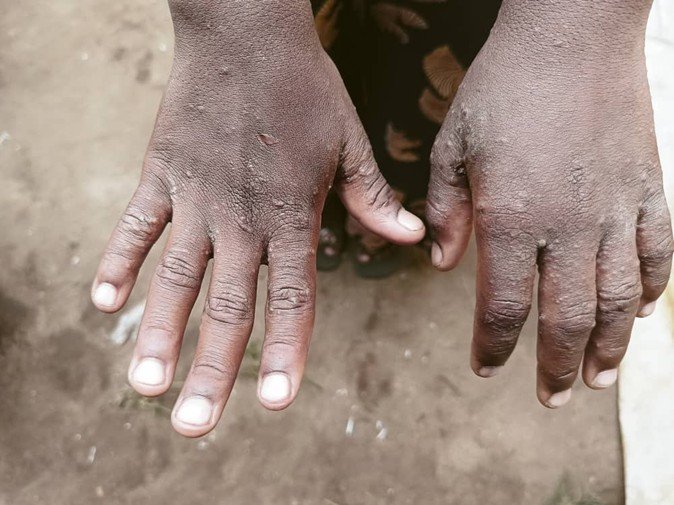
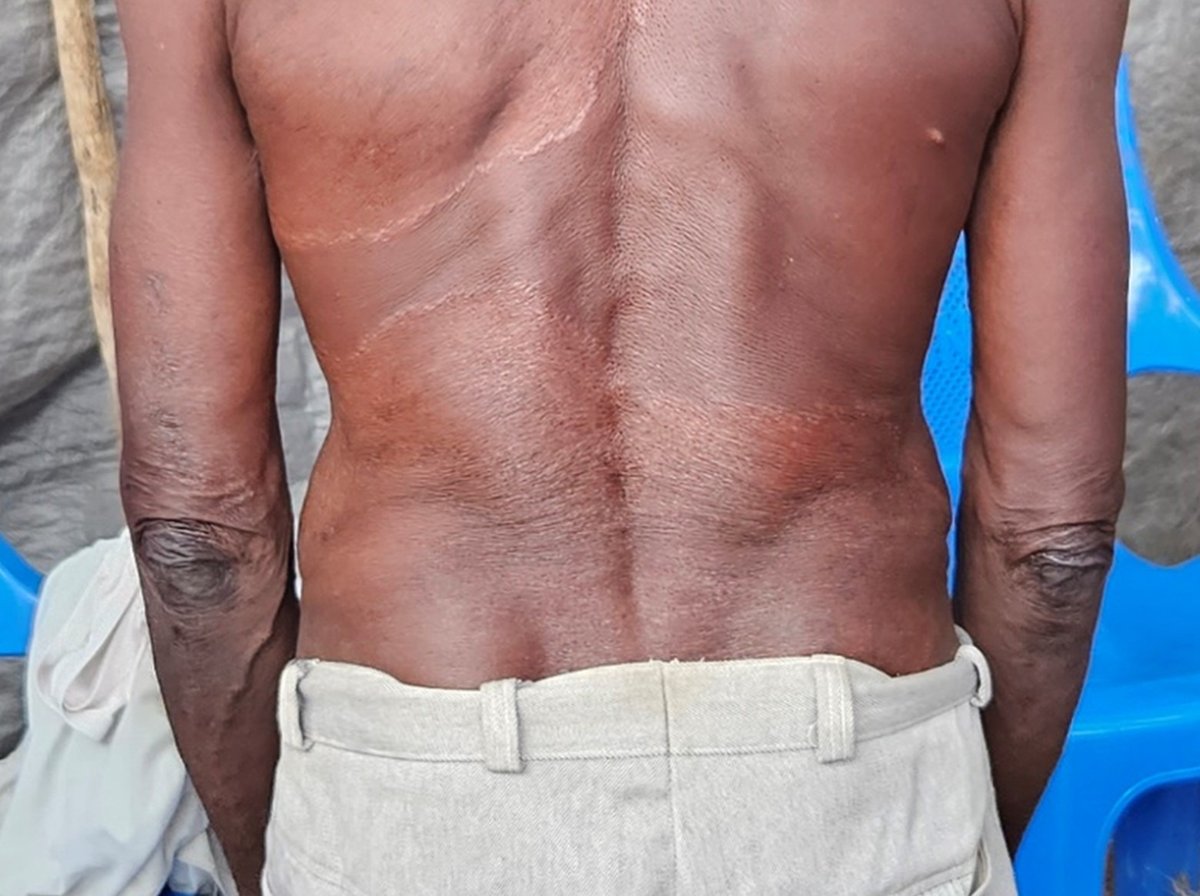
When asked which skin conditions the health workers encountered in the skin camps, the following diseases were listed: atopic dermatitis, scabies (Figure 3), fungal infections (Figure 4), keratosis pilaris, leprosy (Figure 5), pityriasis versicolor, seborrhoeic dermatitis and ulcers.
2. Perceptions of formal training
Formal training was widely valued, particularly given its practical orientation and co-facilitation by a dermatologist. Participants appreciated learning to differentiate between skin conditions.
3. Knowledge development through practice
Informal learning through hands-on experience during skin camp complemented formal training by reinforcing theoretical knowledge. Participants highlighted the value of real-time observation and immediate application of skills in community settings. Skin camp also offered care providers the opportunity to observe and engage with the spectrum of common skin diseases and NTDs – often within a single session – enhancing their appreciation of disease progression and variation in clinical presentation.
What I liked the most … you know, there are different types of teaching methods, like you are told this is a patch, then you see the actual patch which you are shown right there.
Clinician
Skin camps also allowed healthcare providers to develop holistic clinical awareness, including attention to patient dignity, proper lighting, and infection prevention
4. Mentorship and peer learning
Mentorship from senior clinicians and dermatologists was central to learning. One participant stated, ‘I learned through them’, while another stated, ‘I learned through observation’. Participants also formed peer groups to discuss challenges and reinforce learning beyond the formal training setting.
During the skin camps, I was able to ask anything that I was not clear with … I was instructed and reminded … the (mobile phone messenger) group we created helped us to discuss the challenges regarding the skin conditions we encounter.
Nurse Officer
5. Use of Technology
The NLR SkinApp is a practical decision-support tool designed to assist health workers in diagnosing and treating skin diseases – especially in regions with limited access to dermatology specialists. Participants reported using the NLR SkinApp in the skin camps and other healthcare settings; most health workers accessed the application via smartphone.
6. Ongoing Learning Needs
Participants expressed a strong interest in continued learning through extended training, both in terms of time allocation and practical experience.
‘(Classroom) training days should be increased so that people can learn more … because some people understand slowly’.
Clinician
‘In my experience, when we go to the skin camps, we continue gaining knowledge … we learn more and we understand more.’
Assistant Health Officer
It was also reported that an official nurses’ speciality programme in dermatology would be appreciated:
‘Apart from learning through skin camps and reading books, I wish there were a college to train nurses specifically regarding skin disease … Nurses are now (specialised) in different units.’
Nurse Officer
While open to individual future learning opportunities, such as online courses, many interviewees emphasised the need for hands-on practice in dermatology.
‘Online courses, I give them fifty-fifty … if it is a good platform, but I think in skin disease we need to have live patients to feel… to touch the skin.’
Medical Doctor
Discussion
This study highlights the value of combining formal and informal learning opportunities for primary health workers involved in integrated community skin screening programmes in Tanzania.
Although formal training provided foundational knowledge, on-the-job experience, mentorship, and peer interaction were often regarded as being more effective for developing practical skills. Health staff also gained insight into the social, environmental, and collaborative dimensions of care.
Our findings support informal learning theory, where knowledge is gained through real-world engagement and reflection.6 Skin camps enabled ‘learning by doing’, accelerating competence through direct observation, discussion, and immediate application. These insights also align with both Social Learning Theory and Situated Learning Theory.10,11 Health workers learned by observing and modelling experienced colleagues,10 and through active participation in a real-world community of clinical practice, gradually transitioning from novice to confident practitioner.11
Technology also played an important role. The NLR SkinApp (or WHO Skin NTDs App, which contains the latter) provided point-of-care decision support and additional learning opportunities.
Participants expressed a clear need for ongoing professional development, including more in-depth theoretical and hands-on training. These findings suggest the value of hybrid learning approaches that blend brief formal training courses with long-term mentoring and digital tools.
A strength of this study is its focus on frontline worker perspectives. Limitations include a small sample of interviewees from three districts. These preliminary findings, however, offer transferable lessons for similar programmes across the PEP4LEP 2.0 countries and beyond, as well as for other community-based health initiatives.
Conclusion
Informal learning – through mentorship, observation, and practical experience – is vital for strengthening dermatological skills among primary health workers in rural, low-resource settings, such as the Tanzanian districts included in this study. Recognising and integrating these learning opportunities, alongside formal training and the use of digital tools, can enhance diagnostic confidence and service delivery in skin health and leprosy control programmes.
Recommendations
To sustainably strengthen dermatological competency among primary health workers in rural settings with limited access to specialised care, and in line with the recent WHA resolution,2 we recommend:
- Integrating on-the-job coaching, structured mentorship frameworks, peer-learning (digital and face-to-face), and digital tools (e.g., tele-dermatology, WHO Skin NTDs App, e-learning) alongside formal training;
- Engaging key stakeholders – such as the Ministry of Health and medical training institutions – to support the integration of skin health objectives into national policies and training guidelines; and
- Expanding this research to include a more diverse group of health workers from wider settings to improve the evidence base.
Acknowledgements
We would like to thank all study participants, partners, and funders.
References
- Hay R, Fuller LC. The assessment of dermatological needs in resource-poor regions. Int J Dermatol 2011; 50:552–7.
- World Health Organization. Seventy-eighth World Health Assembly – Daily update: 24 May 2025: Member States recognize skin diseases as a global public health priority. Accessed 8 November 2025 at https://www.who.int/news/item/24-05-2025-seventy-eighth-world-health-assembly---daily-update--24-may-2025.
- Abeje T, Negera E, Kebede E et al. Performance of general health workers in leprosy control activities at public health facilities in Amhara and Oromia States, Ethiopia. BMC Health Serv Res 2016; 16:122.
- Mosam A, Todd G. Dermatology Training in Africa: Successes and Challenges. Dermatol Clin 2021; 39:57–71.
- Schmeller W. Community health workers reduce skin diseases in East African children. Int J Dermatol 1998; 37:370–7.
- Marsick VJ, Watkins KE. Informal and Incidental Learning in the Workplace. London: Routledge, 1990.
- Schoenmakers A, Hambridge T, van Wijk R et al. PEP4LEP study protocol: integrated skin screening and SDR-PEP administration for leprosy prevention: comparing the effectiveness and feasibility of a community-based intervention to a health centre-based intervention in Ethiopia, Mozambique and Tanzania. BMJ Open 2021;11:e046125.
- Mwageni N, van Wijk R, Daba F et al. The NLR SkinApp: Testing a supporting mHealth tool for frontline Health Workers performing skin screening in Ethiopia and Tanzania. Trop Med Infect Dis 2024; 9:18.
- Braun V, Clarke V. Using thematic analysis in psychology. Qual Res Psychol 2006; 3:77–101.
- Bandura A. Social Learning Theory. Englewood Cliffs, NJ: Prentice Hall, 1977.
- Lave J, Wenger E. Situated Learning: legitimate peripheral participation. Cambridge: Cambridge University Press, 1991.