2026 DermLink Grant Recipients Announced
18 May 2026
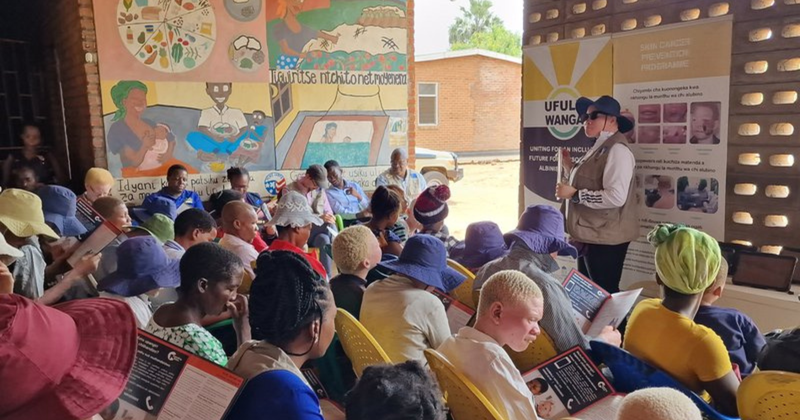
We are proud to announce our 21 DermLink grant recipients for 2026, the highest number of projects supported since the launch of the DermLink Grant Programme. Totalling around US$100,000, these grants will support projects across 18 countries spanning Africa, South America, and Asia.
Every year, through the International Foundation of Dermatology (IFD), we award these grants to projects supported by ILDS Members, including Active Members, Affiliated, and Observer Societies. Our Members are crucial to this initiative, either by undertaking the projects themselves or by providing support for the grant applicants.
Learn more about the vital projects that will be implemented over the next year, and are made possible by the 2026 ILDS DermLink grants:
Stay up to date
Join our mailing list to receive quarterly newsletters, as well as relevant information and updates about our work at the ILDS and IFD.
Sign upDERMALAWI, surgical and preventive strategies for Skin Cancer in Persons with Albinism (PWAs) in Rural Malawi | Spanish Academy of Dermatology and Venereology
The project aims to reduce morbidity and mortality associated with skin cancer in persons with albinism (PWAs) living in rural Malawi. This is achieved through primary prevention, early detection, treatment of premalignant conditions, and proactive surgical intervention. Dermalawi seeks to identify high-risk individuals early and offer them close and sustained care. The goal is to establish a permanent framework for timely treatment and ongoing dermatologic services in resource-limited rural settings, reducing the overall disease burden and improving quality of life for PWAs.
Teledermatology Platform for the Rural Area of the IV Health Region of Neuquen Province | Argentine Society of Dermatology
The project aims to provide a simple and sustainable tool for improving access to dermatologic consultations for underserved communities of the rural area of this distant Patagonia region, through the use of an already available clinical electronic record software by nurses, health care workers and general physicians.
Expansion of the Skin Cancer Prevention Programme for people with Oculocutaneous Albinism (OCA) and research projects in Tanzania | British Association of Dermatologists
This project aims to deliver a comprehensive training course to clinicians in Tanzania on all aspects of skin cancer management for individuals with oculocutaneous albinism on behalf of Standing Voice. The trainees will be from regions not currently covered by the Standing Voice Skin Cancer Prevention Programme. The expansion of the training programme will benefit people with albinism in previously unserved regions, where skin cancer morbidity and mortality is highest. The team will also define further areas for albinism research in Sub-Saharan Africa and plan implementation.
Skin health care for underprivileged people of remote hilly areas in Bangladesh | Bangladesh Academy of Dermatology
This project addresses the high burden of untreated skin diseases among tribal communities in Chandraghona, Kaptai, Rangamati Hill District, Bangladesh. With a target population of 25,000–30,000 people, the initiative will deliver mobile dermatology clinics, provide essential medicines and equipment, and train local health workers in basic skin care. Community awareness campaigns in local languages will promote early treatment and reduce stigma. By combining direct service delivery with sustainable capacity building, the project will improve dermatological health, reduce preventable suffering, and strengthen long-term healthcare access for indigenous populations in one of Bangladesh’s most underserved regions.
The Skin, Our priority | Congolese Society of Dermatology
This project aims to reduce the burden of skin diseases in Goma through improved medical care, education, and psychosocial support. Goma, with over 2.5 million inhabitants, has only two dermatologists; political instability, armed conflict, and disrupted supply routes worsen access to care. Patients, particularly those with albinism, eczema, psoriasis, and vitiligo, face delayed diagnosis, treatment errors, stigma, and social isolation. The project provides consultations, minor surgeries, sunscreen distribution, training for 11 healthcare providers, community awareness campaigns reaching 25,000 people, and psychosocial counselling. By integrating care, education, and support, it strengthens health services, reduces stigma, and improves patients’ quality of life.
Vitiligo Access and Awareness Project | Dermatological Society of South Africa
This project is a community-based initiative, led by the Vitiligo Society of South Africa, to support people with vitiligo in underserved areas. The project aims to reduce stigma, improve understanding, and enhance access to care through outreach events, school awareness programmes, educational materials in local languages, and free or subsidised dermatology consultations. It will also expand digital resources to reach remote communities. By combining education, support, and access to medical care, the project will empower patients, build community awareness, and create a sustainable model of vitiligo advocacy across low-resource settings in South Africa.
Improving the prevention and management of skin cancer for people with albinism in Nsanje district, Malawi | Irish Association of Dermatologists
The project combines targeted training with hands-on service delivery to strengthen skin cancer prevention and care for people with albinism in Nsanje. One day classroom-based workshop days will equip health workers with skills to prevent, detect, and manage skin cancer, while five practical in-clinic training days will provide direct care to over 100 people with albinism and their families. Oversight will be provided by the Standing Voice Skin Cancer Advisory Board, building on Malawi’s established training model. The Ministry of Health will support local delivery by providing staff, facilities, and essential resources, ensuring the project’s impact is sustained beyond its completion.
Healthy Skin, Happy Nation: Combating Skin NTDs and Building Local Capacity in The Gambia | International Society of Dermatology
This project addresses the high burden of tinea capitis and scabies among children in The Gambia through a structured school-based outreach program. Led by Dr Nkechi Enechukwu and supported by the EFSTH’s Solo Skin Clinic in collaboration with the University of The Gambia, it combines monthly free dermatological screening and treatment, hygiene education with comb distribution, and practical training for medical students and healthcare providers. By targeting underserved schools, the project aims to reduce disease prevalence, improve child health and wellbeing, and strengthen local dermatology capacity. The initiative will create a replicable model for addressing common dermatoses in resource-limited settings.
Incidence of common skin conditions and reduction of scabies through mass treatment in a rescue centre in Kibera Slums, Nairobi | Kenya Association of Dermatologists
This project seeks to address the neglected tropical disease, scabies, in a low-resource setting in the outskirts of Nairobi, Kenya, at a rescue centre in the Kibera slums. It will involve health education of the people at the centre by dermatologists and, thereafter, screening of skin conditions and mass treatment of scabies within the population. Thereafter, a follow-up visit will be done to evaluate the outcome and impact of the intervention. This will be documented in a report that will be shared with the health authorities to allow future replication in other low-income, crowded areas.
Breaking the Silence: Community Education and Strengthening Health Care Capacity for Early Detection of Hansen Disease in Ebonyi State, Nigeria | Nigerian Association of Dermatologists
The project “Breaking the Silence: Community Education and Strengthening Health Care Capacity for Early Detection of Hansen Disease in Ebonyi State, Nigeria” aims to improve early diagnosis and treatment, and prevent disability associated with Hansen disease. It will target five high-burden communities through sensitisation sessions, distribution of culturally appropriate IEC materials, and a three-month radio campaign in local languages. Additionally, 30 primary health workers and volunteers will be trained on early recognition and management of the disease. The project seeks to increase community awareness, enhance local healthcare capacity, and ultimately improve the quality of life for affected individuals.
Skin deep misery in elderly: Mapping and managing neglected geriatric dermatosis in Old-age Homes of Lahore | Pakistan Association of Dermatologists
Elderly residents in Lahore’s old-age homes often suffer from neglected skin diseases such as dryness, infections, eczema, ulcers, and pruritus, which reduce comfort and dignity. This 12-month community project will map the prevalence and impact of geriatric dermatoses, provide low-cost skin-care kits and essential treatments, and train caregivers in daily preventive practices. Residents will be screened, treated and referred when needed, with outcomes assessed through symptom relief and feasibility measures.
Observership in Blistering disease | South Asian Regional Association of Dermatologists, Venereologists and Leprologists
This project is an observership training program where the participant will learn from one of the best experts in blistering disease on the diagnosis and management of blistering disease. On completion of the training, the project lead will return to his country to provide the best possible services to Nepalese patients with blistering diseases. As he is working at the government-run tertiary care referral centre, the project lead will initiate a discussion to set up a blistering disease clinic at his centre. He will also train junior doctors on what he has learned in the centre on managing these conditions.
Virtual Care Stations in the SBD Skin Cancer Campaign (Orange December) | Brazilian Society of Dermatology
This project will implement virtual dermatological care stations in underserved areas of Pará, Brazil, as part of the national skin cancer campaign. Through teledermatology, it will enable early detection and triage of skin cancers in vulnerable populations with limited access to specialists. The initiative will use existing health infrastructure and a university telemedicine platform to ensure feasibility and sustainability. It combines service provision with community education and specialist coordination to reduce morbidity and mortality from skin cancer in the Brazilian Amazon.
Protected Skin, Brighter Tomorrow: Transforming the lives of people with albinism in Uganda’s Central Region | Italian Society of Dermatology
This project will launch a pilot program in Uganda’s Central Region, expanding Beyond Suncare’s reach by delivering dermatological services to 316 Persons with Albinism previously outside the program, along with 474 family members in Luweero, Wakiso, and Mukono. It will strengthen knowledge and clinical capacities on albinism in the health sector and communities, targeting 39 healthcare workers and 15 Albinism Umbrella representatives. The model includes the provision of tailored sunscreen, the organisation of dermatological clinics with hands-on practical training for local staff, and support for surgeries and treatment—a UN-recognised “Best Practice.” The project will directly benefit 844 people.
Ensuring linguistic freedom to accurate information: Protect the 'Skin Barrier', break the 'Language Barrier' | Sri Lanka College of Dermatology and Aesthetic Medicine
This project will create a video library on common skin diseases in Sinhala and Tamil, bridging the language gap in patient education in Sri Lanka. Videos will include 1-minute quick facts and 3-minute detailed guides on skin conditions, treatments, and referrals. Content will be published on the SLCDA website and social media platforms with regular awareness posts on health observance days. By providing accurate, accessible, and culturally relevant information, the project will empower patients, reduce misinformation, and promote early medical care, benefiting communities across all ethnic groups in Sri Lanka.
Breaking the Silence: School-Based Awareness on Sexually Transmitted Diseases Among Adolescents in a Nepalese Municipality | Society of Dermatologists, Venereologists and Leprologists of Nepal
This project will: Improve knowledge of sexual and reproductive health - Encourage safe sexual behaviours and reduce risky practices - Facilitate early detection and treatment of STIs - Challenge stigma around sexual education and create an environment where youth can seek help without fear Ultimately, this project will empower Nepal's adolescents-the nation's future generation-with the knowledge, resources, and confidence to make informed decisions about their sexual health. Through education, screening, and counselling, we aim to reduce STI prevalence and strengthen long-term public health outcomes.
Early Detection and Community Care for Leprosy and Leishmaniasis in Apure State, Venezuela | Venezuelan Society of Medical, Surgical and Aesthetic Dermatology
This project will deliver early detection and care for leprosy and leishmaniasis in Apure State, Venezuela, through monthly outreach to all seven municipalities over 12 months. Dermatologists will conduct clinical examinations, skin smears, and biopsies, while local physicians and nurses receive hands-on training. Confirmed patients will be referred to the Dermatology Service in San Fernando and followed locally with support from teledermatology, ensuring continuity of care. Community engagement via social media and local networks will reduce stigma and increase participation. The initiative will strengthen local capacity, improve early diagnosis, and enhance quality of life for underserved populations.
Improving Access to Quality Dermatology Care: Equipment Support for PWA Clinics in Kinyasini, Jitiamai, and Mwera Pongwe District Hospital | Tanzania Society for Dermatovenereology
People Living with Albinism (PLWA) in Zanzibar face significant health challenges, particularly skin cancer caused by prolonged sun exposure and limited access to dermatological care. This proposed scale-up project seeks to improve access to quality dermatology care by equipping three district hospitals—Jitimai, Kinyasini, and Mwera Pongwe—with essential dermatological tools, including dermatoscopes and cryotherapy units, together with the initiation of targeted outreach clinics within the district that will provide UV protection items—such as sunscreen, sunglasses, wide-brim hats and offering skin cancer screenings and education on self-care, and eventually reducing the need for costly referrals and improving health outcomes.
Strengthening Dermatology Training and Care in Ghana | National Medical Association
This project will begin by providing dermatoscopes and updated textbooks to strengthen training and support accurate diagnoses, especially in the absence of dermatopathologists. Joint dermoscopy training sessions will be integrated into both institutions’ curricula and shared with community healthcare providers through virtual continuing medical education. As the partnership evolves, this project aims to expand collaborative learning, develop a formal teledermatology program, and pursue cross-institutional research.
Project Saffron: Advancing Holistic Dermatological and Sexual Health for Underserved Transgender Communities: A Field Initiative for Equity, Inclusion and Empowerment | Indian Association of Dermatologists, Venerologists and Leprologists
Project Saffron is a health initiative for marginalised transgender communities in India, addressing systemic exclusion and stigma. It provides integrated care, including skin health consultations, sexual wellness support (HIV testing, STI screening, PrEP, ART), and emotional wellness sessions. Trained personnel offer respectful, non-discriminatory services, fostering confidence and proactive health engagement. In a global context where transgender rights are under increasing threat, from legislative bans on gender-affirming care to rising discrimination in health systems worldwide. Project Saffron stands as a localised yet globally resonant effort to uphold dignity, inclusion, and equitable access to care in alignment with international human rights standards.
Establishing Ethiopian Psoriasis Patients Association | Ethiopian Dermatology and Venereology Society
This project aims to improve the quality of life for people living with psoriasis in Ethiopia by establishing the Ethiopian Psoriasis Patients Association (EPPA) — the country’s first patient-led advocacy group. Through EPPA, we will raise public awareness, reduce stigma, and promote early medical consultation. The project will also introduce an affordable phototherapy service, providing free or low-cost treatment for patients in need. Healthcare workers will be trained in safe phototherapy use and holistic psoriasis care. Together, these activities will enhance access to effective treatment, empower patients, and build a sustainable support network for psoriasis care in Ethiopia.
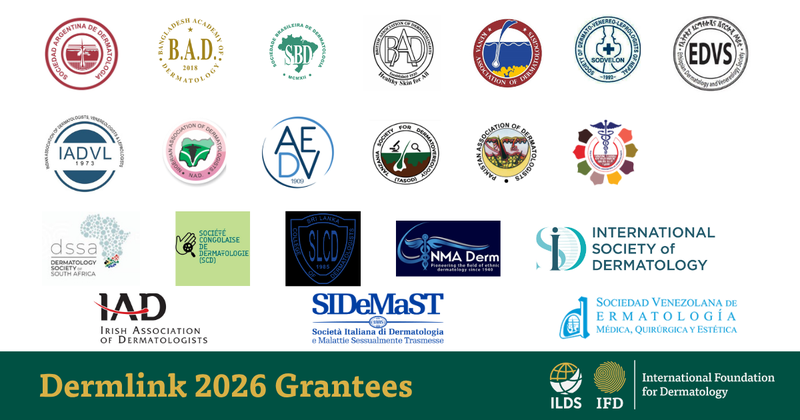
Thank You to All Applicants
We are grateful to everyone who applied for a DermLink grant. The volume and quality of applications we receive each year reflect the incredible work being done around the world to support people with skin diseases.
While we are unable to fund every application, we deeply value the time and effort taken to share your work with us. We encourage you to apply again in the future and to stay updated for the next round of grant applications.
Our DermLink Grants
DermLink is an annual grants programme that provides support for ILDS Member, Affiliated and Observer Societies to undertake initiatives that help patients with skin disease in underserved parts of the world.