Movement for Safe Skin
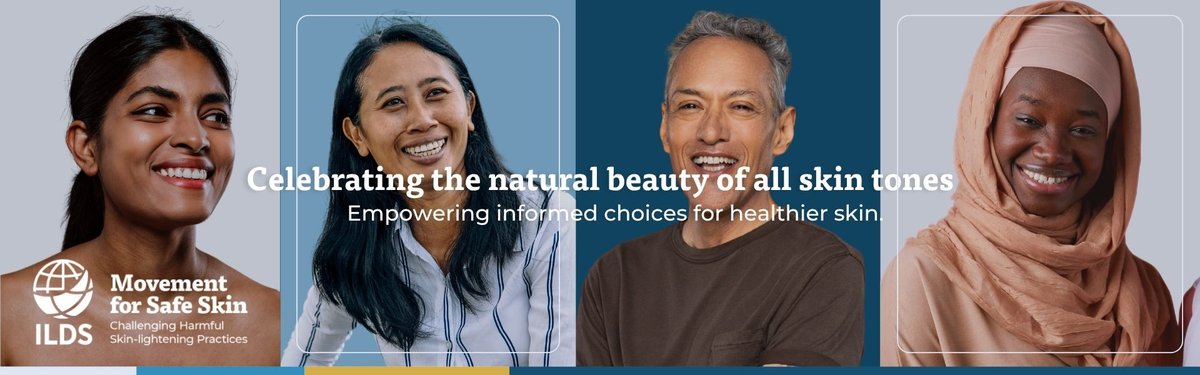
ILDS Movement for Safe Skin: Challenging harmful skin-lightening practices
The ILDS Movement for Safe Skin is a global initiative working to end harmful skin-lightening practices (often called skin bleaching) through evidence, education and advocacy.
Skin bleaching (also known as skin lightening, skin toning, skin whitening, etc.) refers to the cosmetic misuse of toxic agents (e.g., mercurials) or abuse of skin-lightening agents (e.g., topical corticosteroids) primarily to change one’s normal and natural skin colour. Skin bleaching is defined here following Sagoe et al.'s global meta-analysis (PDF).
It brings together dermatologists, sociologists, public health professionals, historians, anthropologists, psychologists, patients and advocates from more than 70 countries. The Movement is grounded in the ILDS position statement (PDF) on the misuse of topical corticosteroids for skin bleaching, developed by the ILDS Strategic Working Group on Skin Bleaching, and committed to action that is evidence-based, community-rooted, inclusive, diverse and non-judgmental.
Not all skin-lightening products are harmful. Some are used to manage concerns such as dark spots, hyperpigmentation, melasma or uneven skin tone, and can be used safely when they meet regulatory standards and are used appropriately. Dermatologists often use prescription and/or non-prescription lightening agents in a controlled manner for patients suffering from pigmentary disorders. But skin-lightening practices that are not under the guidance of a dermatologist or proper medical supervision can expose people to dangerous ingredients and serious health risks, and that is what this campaign sets out to change.
Get involved
You can make a difference. Commit to sharing safe skincare practices today.
Join the Movement for Safe SkinBring the Movement for Safe Skin to your community
The Movement is a long-term, worldwide effort, and we can only reach people through organisations like yours. There are several ways to get involved:
Why do people want to lighten their skin?
To begin educating people on the harmful effects of skin-bleaching products, we must first understand why people want to lighten their skin. Many users may not appreciate the health risks associated with this practice.
The desire for lighter skin is driven by psychological, social, political, cultural and economic realities. Many people are not aware of these pressures, they just think that lighter skin will make a positive difference to their life. Telling people "it's dangerous" will not, on its own, change their minds. People may not also be fully aware of the complications of the products they use. Studies show that awareness of these risks is often strikingly low, with some finding that as few as a third of users understand the harmful effects of the products they apply. Skin bleaching harms the skin in many ways and it can cause permanent mottling and disfigurement — especially to the skin of the face — that can lead to serious psychological distress and social ostracism.
The global skin-lightening industry was valued at approximately US$9 billion in 2023 and is projected to reach US$16 billion by 2032.
Fortune Business Insights 2025
Colourism and beauty ideals
Colourism is the belief that lighter skin is more attractive, more professional, or more socially desirable. It's the root driver of skin lightening globally, and it is not unique to any one culture or region. It exists in different communities and countries across the globe.
In many societies, lighter skin is associated with higher status, greater career prospects, better marriage opportunities, and greater attractiveness. These beliefs are reinforced by family, community, media, and, critically, the beauty industry.
Lighter skin is driven by marketing, social media, and idealised western beauty standards
The global skin-lightening industry is powered by aspirational marketing. Products are promoted, endorsed, and advertised across social media with promises of improved confidence, attractiveness, and social success. Unregulated products are a click away online, and beauty trends travel globally in an instant via social media.
Social media filters and edited images are further reinforcing lighter-skin beauty ideals, making them feel not just desirable but normal. Adolescents and young adults are particularly vulnerable, and studies in Nigeria, Ghana, and Cameroon show that early use is common.
Normalisation and community pressure
In many communities, skin lightening is not seen as an unusual or risky behaviour. It is often part of a 'beauty regimen' that mothers, sisters, and friends do. For many users of skin-lightening products, the decision is not made with full knowledge of what the products contain and the harm they can cause. It is made in response to the world and pressures around them.
Stigmatising people who use these products is not only unhelpful but also counterproductive. People respond far better to supportive, non-judgmental messaging that respects their experiences and builds their confidence to make different choices. Effective behaviour change requires addressing social norms and identity, not just providing health information.
Economic pressure
For some individuals, particularly in high-unemployment contexts, skin lightening is connected to genuine economic calculation. The belief, sometimes reinforced by real experience, that lighter skin improves job prospects, client relationships, or earning potential reflects structural inequalities that go far beyond individual behaviour.
When economic pressure is a factor, the answer isn't to tell people they're wrong for wanting to get ahead. It's to tackle the inequalities that make lighter skin feel like an advantage in the first place.
The toxic chemicals behind the promise of an even skin tone
The skin-bleaching industry in India is estimated to be worth US$500 million and accounts for approx 50% of the skincare market.
World Health Organisation African Region, Integrated African Health Observatory (iAHO) 2023
Many products sold as "skin-lightening" contain toxic ingredients capable of causing serious, lasting harm, yet they are sold openly in pharmacies, markets, salons, and online, including in countries where those very ingredients are banned. Labels are frequently misleading, omitting ingredients entirely or listing them under technical names most people won't recognise.
Some of the ingredients most commonly associated with harmful skin lightening products include mercury, topical corticosteroids, hydroquinone used without appropriate medical supervision, and certain phenolic compounds. These substances may be combined in a single product, increasing the risk of adverse effects.
The consequences can be severe and, in some cases, irreversible:
- Mercury can damage the kidneys and nervous system and is particularly harmful during pregnancy and childhood.
- Hydroquinone, when used without appropriate medical supervision or for prolonged periods, can cause skin irritation and, in some cases, exogenous ochronosis, a permanent blue-black discolouration of the skin.
- Topical corticosteroids, when misused, can thin the skin, cause stretch marks, increase the risk of infection and lead to systemic side effects.
- Certain phenolic compounds may also cause skin damage and other toxic effects depending on the compound and level of exposure.
Change is happening, slowly
In 2023, parties to the Minamata Convention, the legally binding UN treaty on mercury, agreed to close a long-standing loophole, removing the threshold that had allowed mercury in cosmetics and making clear that no mercury may be added to skin-lightening products. The amendment entered into force in April 2025. It is a landmark step.
But a ban on paper is not the same as a product being off the shelf. Mercury-containing creams continue to be made and sold, often through informal markets and online channels, where weak enforcement lets them slip through. The challenge now is closing the gap between the law and the marketplace.
Join the ILDS Movement for Safe Skin
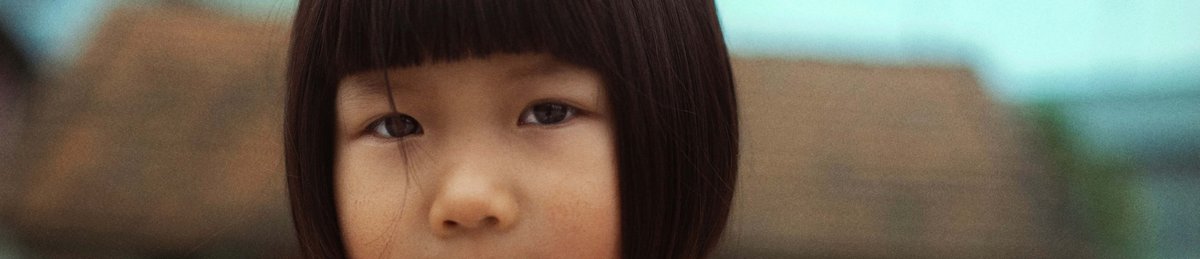
27% of people worldwide have used skin-lightening products, rising to over 70% in some communities.
Sagoe et al., International Journal of Dermatology, 2019
Safe skin is not a colour. It is skin that is cared for, protected, and treated with the attention it deserves. Every skin tone has its own beauty, its own needs, and its own right to proper care.
You can get involved with our Movement for Safe Skin in many different ways. You can share knowledge with your community, practice safe skin, talk to your local politicians to make change, and get support if you're worried about yourself or friends and family.
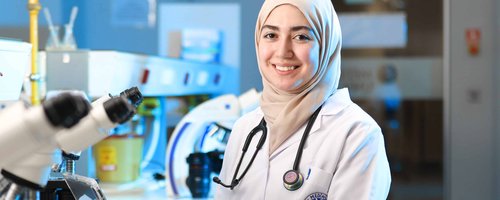
Campaign resources
Download the campaign guide, social media graphics, infographics and other practical resources.
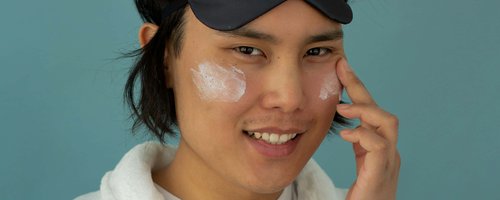
Community and advocacy
Use our messaging to educate communities (churches, schools, markets, etc), engage stakeholders and promote safer skin practices.
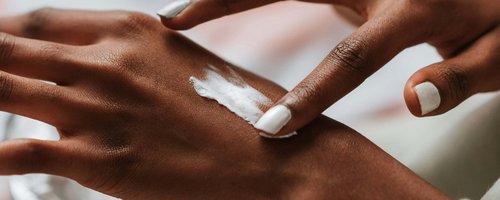
Share the Movement
Share campaign graphics and messages online and within your community to help raise awareness using #MovementForSafeSkin.
The Working Group
Meet the experts leading the Movement for Safe Skin and learn about the campaign's global approach.